Mobile App Homepage Redesign
Industry
Marine
Company
Mercury Marine
Duration
May-Aug 2026
Role
UX/UI Design Intern
Mercury Marine gave me the opportunity to take ownership of redesigning the Home and Vessel experience within their mobile app. As the sole UX/UI Design Intern, I was trusted to lead the project from research through validation, creating a simpler and more effective experience for boat owners.

What did I do?
I conducted user research, analyzed previous usability findings, interviewed stakeholders, explored concepts, created wireframes and high-fidelity designs, and validated solutions through testing. My work focused on improving navigation, discoverability, customization, and access to critical vessel information.
imagine you're trying to find information about your vessel and keep getting lost in pages on pages within the app...


What is the Mercury Marine App?
The Mercury Marine app helps boat owners monitor and manage their vessel through connected features like engine data, maintenance tracking, device management, and vessel insights.
Who did I work with?
I collaborated with designers, engineers, product managers, and stakeholders across multiple departments while continuously incorporating feedback from Mercury customers and usability testing participants.
the process
Simplifying a data-heavy experience without sacrificing functionality.
Research showed that users struggled to quickly access critical vessel information due to complex navigation, poor information hierarchy, and low feature discoverability. The challenge was finding a way to surface the information users care about most while maintaining the app's extensive capabilities.
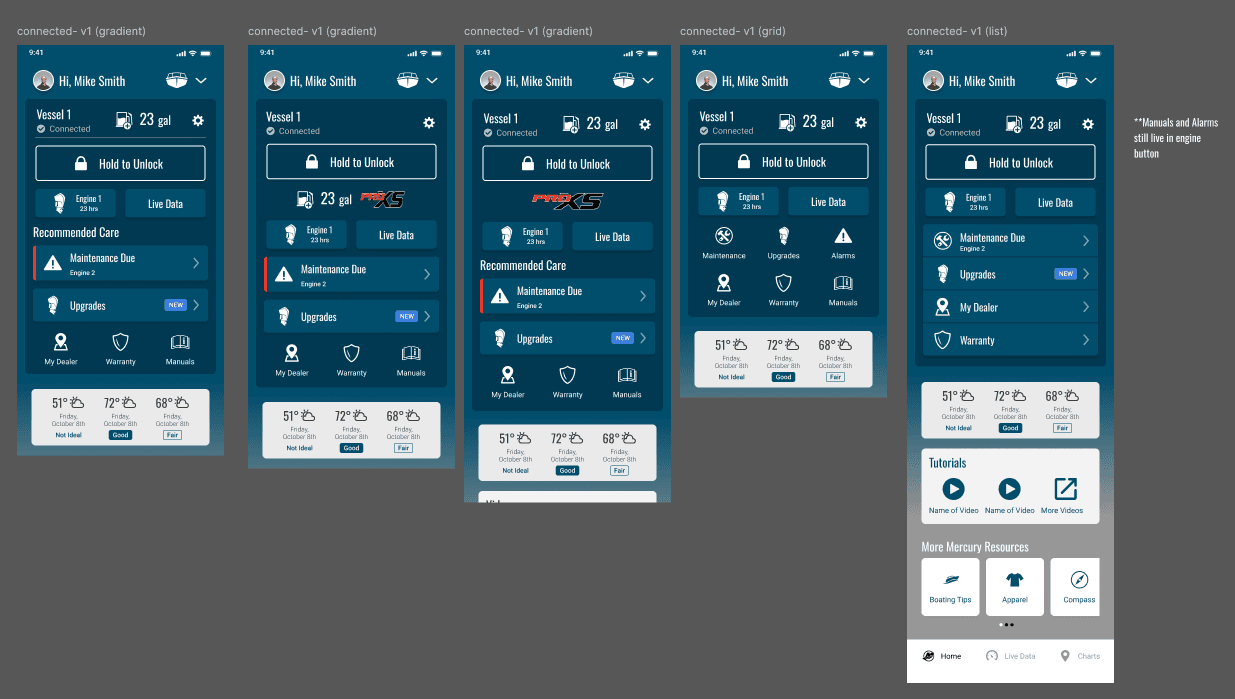
The design process involved a substancial amount of ideas and workflows, a few highlighted here.
how might we create a more intuitive and customizable experience that helps users access critical vessel information with less effort?

Key Focus
but, why?
Boating environments are unique. Whether users are preparing for a trip, troubleshooting an issue, or quickly checking vessel status while on the water, they often need information immediately and with minimal distraction. Every design decision was grounded in helping users find answers faster and make confident decisions without searching through the app. By improving information hierarchy, discoverability, and customization, the redesign aimed to create an experience that supported boat owners in real-world situations, not just within the app itself.
throughout the design process, being able to answer the "why" is very important.
My Impact
100%
Previous Usability Issues Resolved
100%
New Designs Validated Through User Testing
7
Recommendations Given to Enhance Experience Beyond Vessel Management
What did I learn?
Design Beyond the Screen
This project completely changed the way I think about designing digital experiences. For the first time, I was creating solutions for products that existed beyond the screen and into the physical world. Seeing engines, boats, and connected devices firsthand, and even experiencing them through on-water product testing, gave me a much deeper appreciation for designing within a real environment. It reinforced that great experiences don't start and end with an interface; they need to support users wherever they interact with the product.
Trust the Process
As the only UX/UI Design Intern working on the project, I had a lot of ownership and freedom in shaping the final experience. One of my biggest takeaways was learning to trust research and user feedback, even when it challenged my initial assumptions. The strongest design decisions consistently came from listening, asking questions, testing ideas, and iterating based on what I learned. This experience strengthened my confidence in both my design process and my ability to solve complex problems through user-centered thinking.
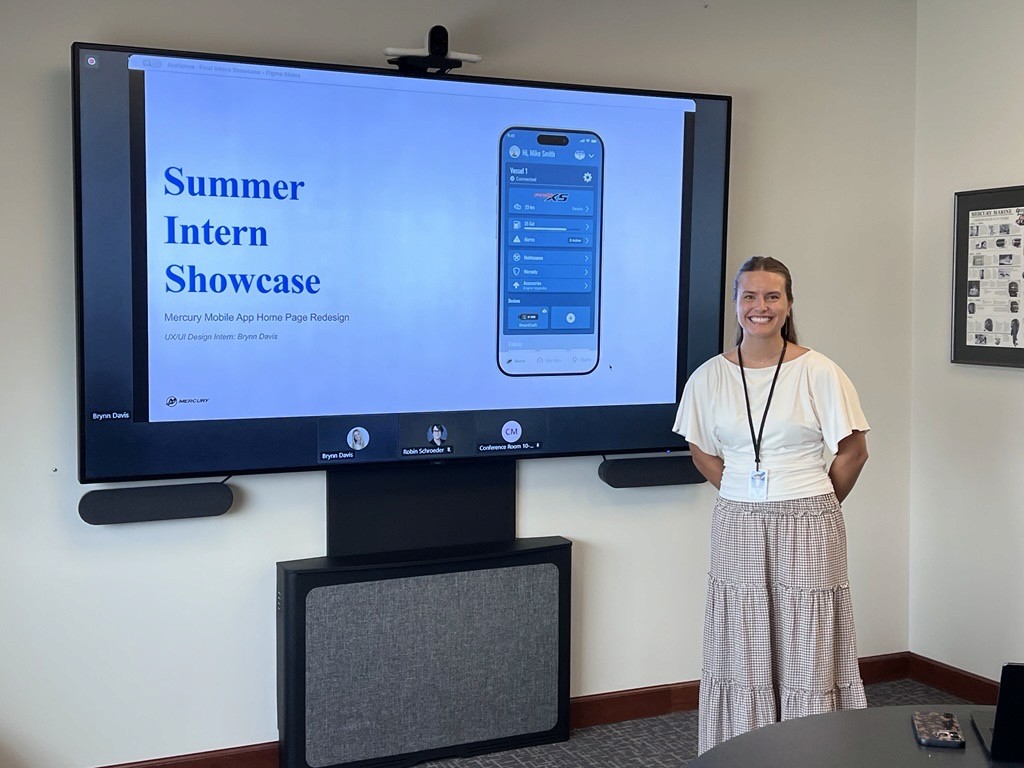
I had the opportunity to present my work to a room of stakeholders during my last week at Mercury. I wanted to pitch to them the importance of this redesign to the company.
Outside the project?
Alongside my design work, I immersed myself in the broader Mercury experience through hands-on product testing and professional development opportunities. By participating in on-the-water testing, I observed Mercury engines in real-world conditions and gained valuable insight into how boaters interact with the systems I was designing for. I also took part in Envision Fond du Lac, a program focused on leadership, networking, and community engagement for local interns, and attended Mercury's Lunch & Learn sessions, where leaders across the company shared perspectives on business strategy, product development, and cross-functional collaboration.
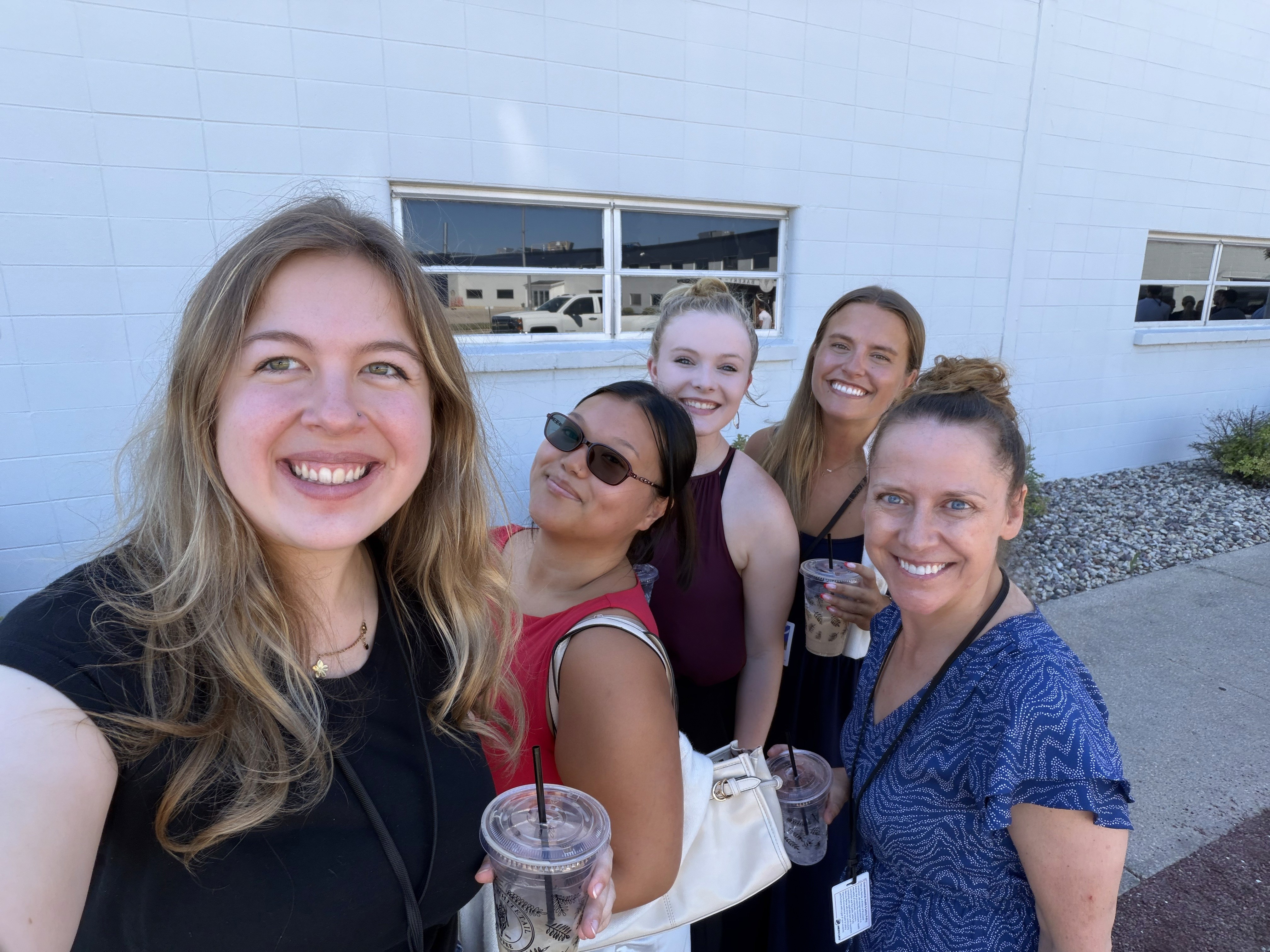
Some of the amazing people I met and worked with during my summer at Mercury.