Improving Access to Legal Resources

Project Type

Website Redesign & Accessibility Improvement

Company

U Do It Legal (UDIL) × Purdue Experience Studio

Duration

January – May 2025

Role

UX Designer & Team Lead

This project challenged our team to improve how people access and navigate legal resources online. Partnering with U Do It Legal, we redesigned key areas of their website to create a more intuitive experience, validate design decisions through user testing, and implement solutions directly within a live production environment. As one of the team leaders, I played a role in guiding both the design process and client communication throughout the semester.

What did I do?

I contributed across every phase of the project, from usability audits and wireframing to implementation and stakeholder communication. Beyond helping develop design solutions, I worked directly within Squarespace to bring those solutions to life, documented design decisions, supported client meetings, and helped shape our final presentations.

imagine you're searching for legal guidance during a stressful situation and can't quickly find the information you need.

What is this U Do It Legal?

U Do It Legal (UDIL) is a nonprofit organization that provides affordable legal resources, education, and support for self-represented litigants navigating California family law cases. Their website serves as a critical resource hub for individuals seeking guidance without traditional legal representation.

Who did I work with?

I worked alongside a multidisciplinary team of designers and researchers while collaborating directly with U Do It Legal stakeholders throughout the semester. Frequent feedback sessions helped ensure our solutions balanced user needs, organizational goals, and technical constraints.

the process

Helping users find legal information without adding stress to an already overwhelming process.

Users often struggled to locate relevant resources, navigate large amounts of information, and understand where to begin. At the same time, our team needed to redesign the experience while working within the limitations of Squarespace, requiring us to balance ideal solutions with technical constraints.

how might we create a more intuitive and accessible experience that helps self-represented litigants find the resources they need with confidence?

Key Focus

Our team focused on improving how information was organized and presented throughout the site. Because many visitors arrive looking for answers to specific legal questions, making resources easier to find became a top priority. We paid particular attention to navigation patterns, content organization, and reducing the amount of effort required for users to locate relevant information. Accessibility and clarity remained central considerations throughout the project, ensuring information could be easily understood by a wide range of users.

Our team focused on improving how information was organized and presented throughout the site. Because many visitors arrive looking for answers to specific legal questions, making resources easier to find became a top priority. We paid particular attention to navigation patterns, content organization, and reducing the amount of effort required for users to locate relevant information. Accessibility and clarity remained central considerations throughout the project, ensuring information could be easily understood by a wide range of users.

How did I solve the problem?

How did I solve the problem?

A large part of my contribution involved bridging the gap between design concepts and implementation. Beyond helping identify usability issues and develop solutions, I worked directly within Squarespace to bring designs to life while navigating platform limitations. This required constant collaboration with teammates and stakeholders, creative problem-solving, and flexibility when technical constraints prevented us from implementing designs exactly as envisioned. By balancing user needs, project goals, and platform capabilities, we were able to deliver meaningful improvements while remaining realistic about implementation requirements.

A large part of my contribution involved bridging the gap between design concepts and implementation. Beyond helping identify usability issues and develop solutions, I worked directly within Squarespace to bring designs to life while navigating platform limitations. This required constant collaboration with teammates and stakeholders, creative problem-solving, and flexibility when technical constraints prevented us from implementing designs exactly as envisioned. By balancing user needs, project goals, and platform capabilities, we were able to deliver meaningful improvements while remaining realistic about implementation requirements.

What stands out about my design process here?

What stands out about my design process here?

One area I was especially passionate about was the FAQ experience. Through research and testing, it became clear that users often struggled to sift through large amounts of information to find answers relevant to their situation. I championed a complete reorganization of the FAQ page, introducing clearer categorization and improved structure to make content easier to browse and understand. This effort became one of the most tangible examples of how thoughtful organization can significantly improve usability.

One area I was especially passionate about was the FAQ experience. Through research and testing, it became clear that users often struggled to sift through large amounts of information to find answers relevant to their situation. I championed a complete reorganization of the FAQ page, introducing clearer categorization and improved structure to make content easier to browse and understand. This effort became one of the most tangible examples of how thoughtful organization can significantly improve usability.

but, why?

For many users, this website serves as one of the first places they turn when navigating difficult legal situations without professional representation. When information is difficult to find, users may feel overwhelmed before they ever reach the help they need. This project reinforced the importance of designing experiences that prioritize clarity and accessibility, especially when serving people who may already be under significant stress.

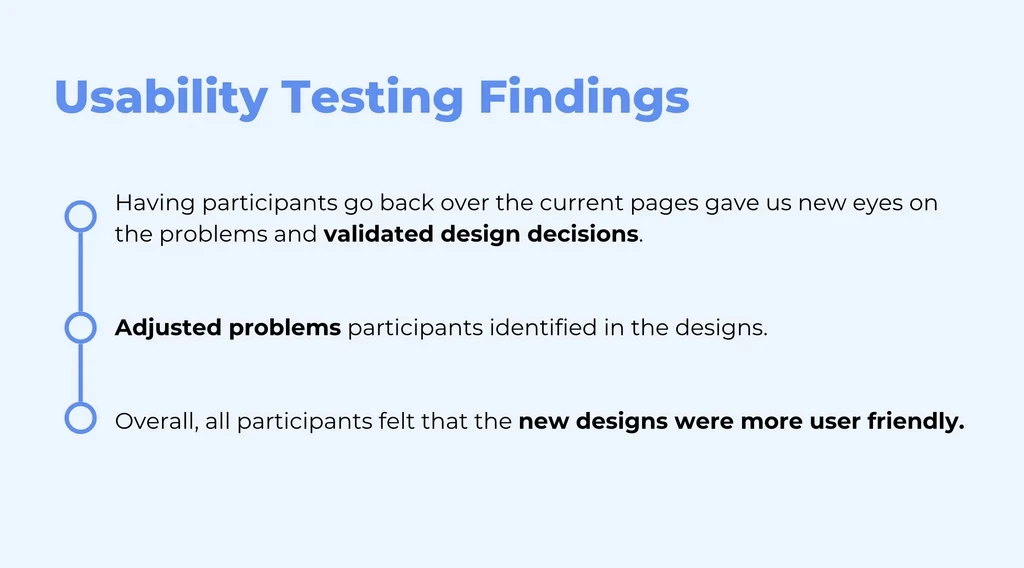
throughout the design process, being able to answer the "why" is very important.
What did I learn?

Constraints Can Strengthen Creativity

One of the biggest challenges was working within the limitations of Squarespace while still delivering a meaningful redesign. Rather than viewing constraints as obstacles, I learned how they can encourage creative problem-solving and force designers to prioritize what matters most. This experience helped me become more adaptable and better prepared for real-world design environments where ideal solutions aren't always possible.

Leadership Is Built Through Ownership

This project pushed me into a larger leadership role than I had previously experienced. Between sponsor communication, implementation decisions, documentation, and presentations, I found myself helping guide both project direction and team discussions. Through that experience, I gained confidence in making decisions, communicating with stakeholders, and advocating for users while balancing competing priorities.

For more context

Please feel free to reference the project documentation and final presentation for additional details. If you would like to learn more about my specific contributions or discuss the project further, feel free to reach out to me!

Create a free website with Framer, the website builder loved by startups, designers and agencies.